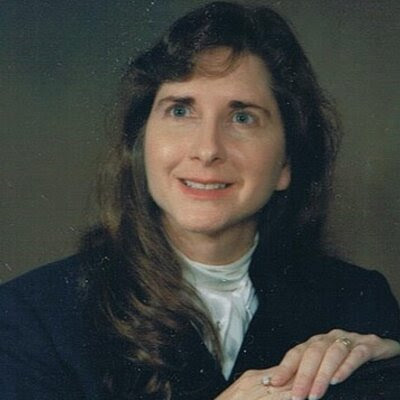
Our next Guest author is Lizz Schumer. Lizz Schumer is a journalist, author,
and educator. She currently works as the senior staff writer at Good
Housekeeping, Woman’s Day, and Prevention magazines and her writing has
appeared at or is forthcoming in The New York Times, VinePair, Serious Eats,
Bon Appetit, HuffPost, Salon, Ploughshares.com, Entropy Mag, The
Manifest-Station, Wordgathering, Punchnel’s, Ghost City Review, and many
others. She also teaches journalism and communications at New York University
School of Professional Studies and provides one-on-one writing coaching and
workshops with The New York Writing Room.
Her first book, Buffalo Steel, https://www.amazon.com/gp/product/1612962580/
came out from Black Rose Writing in 2013 and her second, Biography of a Body, will
be released by Unsolicited Press in January. It’s available for preorder here. (see details after the interview).
Do
you send a proposal before a book is accepted? Do you send in an outline first
and get that okayed or do you go straight to the full draft?
Because I am allergic to outlines,
(despite realizing and fully acknowledging their utility!) I never do them for
my creative work. I know many authors have queried outlines in addition to, or
as a follow up to their query letters, and that it’s generally more common in
nonfiction publishing than the work I do. I’ve seen a number of publishers
request them for particular genres, but those aren’t the genres I’m working in,
as a rule. I’ve always got a full, polished draft ready to go before I query,
but I would never send more than requested at the outset.
I’ve never been
commissioned by a publisher, per se. The way I’ve done it, I’ve always sent a
query letter with however much of my manuscript each agent or publisher
requests in their submissions guidelines online. That’s usually between 20-50
pages or the first couple chapters. If the editor likes what they see from the
query letter and sample pages, they ask to see the full manuscript. Once they
evaluate that, they send a publishing contract to sign. At that point, once I
decide whether to work with them, we’d enter the three-stage editing process
(developmental/structural, copy & proof).
Do
you do several drafts before you send it to the publisher for editing, or do
you just send the first draft?
Oh my goodness, my heart drops at the
very idea of letting anyone see a first draft! No one sees my first drafts, and
only my writing group sees the second, third, and sometimes fourth drafts too –
and even that makes me nervous. My first drafts are generative; I put
everything that might feasibly make it into the work onto the page and then
cut, rearrange, edit, and polish from there. I’m a wordy writer (as you may be
able to tell!) and I often say that it takes writing through a question to
figure out my answer. I’d be shocked if anyone sent their first drafts to
publishers, to be honest. That seems like a very risky move, and I’m certainly
not arrogant enough to think my early drafts are good enough to see the light
of day, much less an editor’s desk.
How
many times do you go back and forth (on average) - does it vary with the
publisher or with the story?
It really varies quite a bit. As a
journalist, I go back and forth with my editors on my stories at least a
handful of times, depending on how much our visions differ for how the end
product should read. When I’ve worked with an editor for a long time, I can
usually get to know what they’re looking for, and that cuts down the number of
passes we need to make. I also try my best to submit clean drafts that are free
from grammatical and syntactical errors and, when I have access to it, adhere
to the publication’s style guide.
For my creative work, it varies widely.
I’ve submitted to literary magazines that just give it a quick copy edit, and
I’ve worked with literary editors who want to really shape and direct the piece
together.
For both of my books, we’ve gone through
a light developmental edit, then copy editing, then proofreading over a course
of three or four passes that take a year or so.
What
kind of changes/suggestions do they make? Are they just minor ones or are they
major?
When I go through a draft with an
editor, they’re really only fixing things like repetition or redundancy — in
one manuscript, I’d repeated an anecdote twice in two different sections, for
example — and any inconsistencies or inaccuracies, like misspelling Lego as
LEGO or spelling a character’s name two different ways. I think that’s an
interesting distinction between hybrid poetry and fiction, perhaps. Because I
ensure that every word is really essential before sending a draft to my editor,
there’s not much quibbling over which belong and which don’t. In that respect,
my earliest draft is pretty much “finished,” to the extent that any work ever
is!
The most dramatic edit that we did on my
most recent book, and maybe this is another difference between genres, was
adjusting the lineation so it read as intended once the book was formatted. I
wrote it in Google Docs, and obviously the bound book will be quite a bit
smaller, so some of the poetic sections looked very different in the new
format, and needed to be adjusted so we could retain the intended meaning. In
some cases, I had to decide whether to break up lines or insert additional
spacing, and how to use first-word capitalization. We also discussed
whether to use numerals or write out the title headings, since that creates a
different experience, as well.
Another thing I did, which is another
aspect of editing, was working very closely with my publisher’s cover designer
to find cover art that represented not only the content but the tone of the
work. We went back and forth a handful of times on font, title and byline
position and sizing, until we were both happy with it. That’s one of the main
reasons I choose to go with indie publishers, or have so far: I’m a
collaborative writer and creator, so I really appreciated the opportunity to
provide input on that aspect, as well.
Does
it go through various stages, like developmental, copy editing and then
proofing? Or is it straight into copy and proofing? Or again, does that vary on
book and publisher?
Since I wrote hybrid poetic memoir,
there aren’t really any plot holes, or really much plot, to be frank. My
writing isn’t generally character-heavy, so that doesn’t particularly apply
either. My manuscript really doesn’t really change much, content-wise, from the
draft I first send to my editor, through the final product.
I try to submit clean copy, so there
aren’t usually a lot of copy edits, but invariably a couple of things sneak
through. I’ve had editors suggest that we reshape a piece a bit, enhancing some
elements and pulling back on others. My favorite editing story actually comes
from when I was studying for my MFA at Goddard College. One of my advisors
there told me, “Not every story needs to be told verbatim,” and that really
stuck with me. At the time, I was writing my way through my first book, and
really struggling with which vignettes to highlight and which to gloss over.
When I stepped back and considered the weight of each section and whether it
really needed to be included, I came away with a tighter, more balanced book.
I’ve applied that advice to literally everything I’ve written since, and I
think it’s served me well.
What
would you say best practice is in regards to accepting/rejecting edits - is
there always a discussion, or do you feel you have to accept all/some of them?
In the best cases, there’s almost always
some degree of back-and-forth. Some edits, like copy edits, aren’t really
negotiable. The English language is what it is, with very few exceptions. I
look at the editing process as a relationship, and there’s always some give and
take in any healthy partnership. I trust that my editors are good at their
jobs, that they believe in the work and want to send the very best version of
it out into the world, and I know my editors know that I want the same, too. I
tend to accept the vast majority of suggestions my editors give me, because I
know that sometimes I’m just too close to what I’ve written to see it
accurately after awhile. And an objective third party will almost always be
able to pinpoint issues better than its creator.
That said, there have definitely been
times in my journalistic work where editors have had a heavier hand than I’ve
been totally comfortable with. I think all of us who have freelanced for any
length of time have those stories. There’s one piece in particular, at an
outlet that shall remain nameless, that rewrote basically the entire story and
changed the voice so dramatically that it didn’t sound remotely like me. I
considered asking to have my byline removed, and if it had happened today (now
that I’m older and more confident), I would have advocated for myself more
strongly. But it’s rare that even heavy-handed editing gets that egregious.
We’re usually able to find a middle ground and the work that results is always
better than it would have been without editing.
Do
you find it hard to embrace the suggestions/changes given?
I used to, when I was first starting
out. But now, I really value the editing process. You’ve probably heard the
phrase, “kill your darlings.” I think that speaks to how emotionally
challenging editing can be. Especially when you’re writing highly personal
narratives, like I do, editing can sometimes feel like your own perception and
expression of your very life is being questioned. But I look at the editing
process as a journey toward refinement. There’s definitely a moment of anxiety
when I first see a Google Doc full of comments and suggestions, but once I dive
in, I actually get excited to engage with the work under an editor’s guidance.
It’s fascinating to see a fresh perspective on something I’ve usually worked on
for months or even years once it gets to that stage, and to collaborate with
someone else on making it even better. It’s a humbling process, but one that
makes me a better writer and creates a better result, every time.
Thanks
so much for taking part in this blog series.

BIOGRAPHY OF A BODY is a lyrical meander through the development of a messy, flawed, imperfect human and what it means to live in a society that both pulls a person into itself and fiercely pushes back. In personal essays and snippets of verse that shift back and forth through time and place, Lizz Schumer fidgets with the puzzle pieces of a life that are at once starkly unique and glaringly obvious. Schumer probes the influence of religion on a person's psychological development, how the legacy of traditional femininity works their way under her skin, and the many pitfalls of living in a body that doesn't always conform to expectations, both from within and the world pressing on it. Follow her as she grapples with an eating disorder that threatens to consume her body and soul, undergoes a sexual awakening that reverberates through her social structure and understanding of herself, tries to find her place in a world where the rules are always changing, and fumbles to understand how much of her personhood is a compilation of outside influences she can barely pinpoint, and how much is wholly her own. This is less a narrative than a trail of breadcrumbs through an experience, where strange things whisper from the shadows and draw the reader into the dappled darkness. Readers will find themselves wandering along with her, grasping onto vivid insights and suggestions of feelings that will stay with them until long after the last page is turned.