Sunday, 8 November 2020

The Travelling Cat ChroniclesThe Travelling Cat Chronicles by Hiro Arikawa
My rating: 3 of 5 stars

I read this book for my bookclub. I was quite looking forward to it, but it was a struggle to read for two reasons. First was the translation: I felt this could have been edited better after the initial translation. A lot of sentences didn't read well and could have been reworked, and also some paragraphs.

The second was that it was a VERY long time until anything happened. It is a sort of aimless ramble about a guy going round his old school friends to see if anyone will take his cat. It is from the POV of the cat sometimes and that could be considered interesting, except it wasn't always. For more than half of the book you have no idea why he is trying to get this cat homed as he does have an apartment. With each friend he visits we go on a trip down memory lane about how he met them. We learn more and more about him during each visit, but it isn't until around 70% in that you find out why.

And really it is only the last chapter that really redeemed this book for me and make it a 3 star rather than a 2 star. Finally something interesting happened. Heartbreaking? Maybe. I didn't feel connected enough to the character to feel a great deal as I felt the narrative was very flat. Yes it is sad.

This is a 'Literary' book, hence it has won a ton of awards. I am still yet to understand why these sorts of books have such an impact. I feel that they are given an award and that is what attracts people to read them. They are put on a 'bestseller' list and thus people think, oh it must be good I will buy it. But personally, this was left wanting. Maybe in its original language it reads a lot better. Maybe there is a lot lost in translation.

I feel like I missed the point of it. Lovely cover though.

View all my reviews

Thursday, 5 November 2020

Guest Blog - Editing Process Q&A - Vanessa Knipe

Our next Guest author is Vanessa Knipe, a dark fantasy writer.

Born in Malaysia, Vanessa first landed in the UK at 3 years old. As a teen, Vanessa learned her love of canoeing in the alligator infested bayous of the Texas Gulf Coast. She now lives in Scotland and juggles fighting for a decent education for her Autistic son with wrestling the Creatures of the Night, though that’s not a nice thing to call her cat. Vanessa has concentrated on her writing since becoming widowed in 2001, as being a single mother of a disabled child made it impossible to work the required shifts in NHS Biochemistry laboratories. 2006 saw her beginning her writing career proper with the publication in the US of Witch-Finder, a collection of short paranormal adventures. She has had seven books published with two publishers, five still in print. She was recently awarded an MSc (dist) in Forensic Science from the University of Strathclyde. 

Do you send a proposal before a book is accepted? Do you send in an outline first and get that okayed or do you go straight to the full draft?

Proposals are for non-fiction. I haven’t done non-fiction yet, but I understand the process. A publisher will commission the writer to write the manuscript off the back of the proposal. For fiction, I always follow a publisher’s guidelines; they usually have a helpful page telling prospective submitters how to make it easy for them. All the places I have submitted to have wanted the first three chapters and a synopsis. They recommend that the full manuscript is ready if they are interested because they could forget you in the time it takes to write the book after the submission. I don’t see the point in querying unless I have a fully prepared manuscript.

Do you do several drafts before you send it to the publisher for editing, or do you just send the first draft?

I have never sent in a manuscript for submission that hasn’t been the best I can make it. Most have gone through a minimum of 5 passes at editing by me. After the fourth pass I take it to my critique group and let them read it. The final draft incorporates suggestions from the group. After that I change the font from TNR to comic sans – it’s amazing how many errors are still in the manuscript even at that point. Finally, I draft a synopsis and start the submission process.

My first ever published short story, Granny’s Secret for Perfect Vegetables, went through an additional editing stage. I had to produce a script for a course I was taking and I chose that one. Along the way it acquired more action scenes and a better ending – so I wrote those into the short story and it was published. I learned a lot from that incident.

How many times do you go back and forth (on average) - does it vary with the publisher or with the story? 

Two or three times at most. Both my publishers set deadlines once we started the process.

What sort of deadlines did they set? Were they short or long? Were they in depth edits that were going back and forth over or small things?

The deadlines were for the date of publishing. As I have worked with small presses the publishing dates were usually four to six months; I understand it’s longer for the larger presses. The time I spend with the publisher’s editor is different. They have two to three weeks for each book so it’s a rapid back and forth. Only one book had major edits because it needed shortening as the publisher had a maximum word count that I had breached. We rolled back to an early draft, which was shorter, and added in bits from the later draft that couldn’t be left out.

What kind of changes/suggestions do they make? Are they just minor ones or are they major?

For me it has mostly been copyediting at this stage, except for the book mentioned above.  One book the editor pointed out that I had a love affair with a particular word – a time travel book where I called everything a Chrono-something, like a Chronosploder for a time bomb, Chronostream for moving through time or Chronoshield protection againt a Chronosploder. So I had to cut back on that and come up with new words. I’ve actually done it again in a book I’m preparing for submission. This time I’m overusing the word Chaos. A critique partner pointed it out so I’m replacing Chaos with raw power, wild magic and uncontrolled force.

One book was rejected by a publisher, even though it was in the same series as he was running, because I had been so obvious with the wicked stepmother cliché. That was a rewrite and resubmit that was over five years ago and I still haven’t figured out how to replace the wicked stepmother.

What would you say best practice is in regards to accepting/rejecting edits - is there always a discussion, or do you feel you have to accept all/some of them? 

You are adapting your story to the House Style. It is better to at least try to come up with a compromise with your editor so you’re happy to have your name on the cover. I tend to accept most of them unless I can come up with a good reason to keep it my way. Once it’s in the hands of a publisher, it’s their book. If you don’t agree with that then you go independent.

Thanks so much for taking part in this blog series.

 One last question, what projects are you currently working on?

I'm currently editing two fantasy books: He Who Drinks Fire  (where the overuse of Chaos happened) an alternative world epic fantasy. There is a submission window with a publisher at the end of November which I hope to catch. And Diamond Winter which is a fantasy apocalypse, but the ending needs rewriting so it won't make the submission window. I intend to do National Novel Writing Month with two SF novellas, and I have a part-finished near-future detective novel crossed with the Scarlet pimpernel.

You can find all of Vanessa’s book on her Amazon author page.  


Wednesday, 4 November 2020

Mid-Week Flash Challenge - Week 173

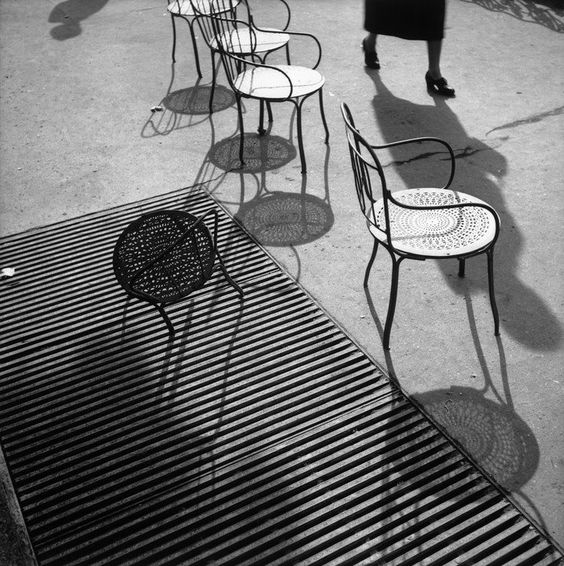
This week's prompt photo was taken by Swiss Photographer Rene Burri, in Luxembourg Gardens, Paris in 1950. He died in 2014 at the age of 81. 

I had this story in my head for a few days, but it's always finding the time to write that is my problem. And not really just that, but to actually get started and stop procrastinating! 

The General Guidelines can be found here.

How to create a clickable link in Blogger comments can be found on lasts week's post here.

There is also a Facebook group for Mid-Week Flash, if you fancy getting the prompt there.


Momento

He pushed the shovel into the ground leaving a mark. It was soft at this time of year, so it wasn’t difficult – not like it had been last year. He left a line all the way round until he had the shape he wanted. Then he put his foot to the edge and pushed in deeper, digging the earth up, and shovelling it off to his right.

There was something therapeutic about digging in the ground; Gus felt at one with nature, breathing in the forest air, hearing the birdlife in the trees. It was how it was meant to be, man out here in the wilderness doing his thing, not bothering anyone.

He’d been ‘off grid’ before the saying was fashionable. No one could find his place; there were no roads, no defined paths. He’d built the place with his own hands. He loved it up here. He’d tapped some of the water coming down from the mountains, which in turn powered what few apparatus he couldn’t live without.

He went into town occasionally, a handful of times a year, and was reminded why he’d left civilisation. People weren’t kind. They didn’t really care about the guy next door. They liked to think they did; they pretended to, to feed their own need to feel good. They needed to feel connected to each other to give them purpose. Gus didn’t need that. He felt connected to nature, and himself up here. That was all he needed. He didn’t like people. He didn’t want to see them or be with them, but there were certain items he couldn’t live without.

His dislike of people went way back, and if he really thought about it, it came back to one instance, one moment that had decided it all for him and brought his existence among the herd to a close.

He remembered it like it was yesterday. He’d spent a long time trying to fit in, and by the time he’d finished college he’d managed a pretend life. He existed in so far as showing up to events and places where others were, but that was all. If he’d dared to engage he was shunned. He was the nerd they didn’t want to notice. He was good for things like rides, going round his house and eating his cupboards empty, and borrowing money – money they didn’t think they had to give back.

But that day on the square it changed. He’d arrived late which meant a seat on one of the outer tables on the terrace the cafe occupied. It made it hard to keep up with what was going on and feel a part of it. And then he’d had to shuffle back to let someone get their chair out, and one of the legs of his had moved onto a metal grate and slipped through. He’d gone down with a crash.

They’d all noticed him then. They’d laughed and laughed. Not one of them got up to see if he was okay, or helped him. He’d cut his arm quite badly and grazed up the side of one leg, but they weren’t interested. Just lots of jeering and pointing until the entire square were looking.

He’d got up and pretended all was well and chuckled a little too. But once they had died down and gone back to their chatter he’d slipped away and gone home. He’d nursed his cuts and scrapes and nurtured his bruised ego.

But they hadn’t let him forget; ‘Gus the Grate Lover’ became a nickname, one he couldn’t shake. And each time it was explained to someone new, he was humiliated again.

During the term break he’d come up to the mountains on a hike to get away from it all, and decided to make the move. He’d never looked back since.

But he hadn’t forgotten, and every visit he’d take a momento back with him. He’d smuggle it up here in the back of his car, and lug it the last quarter of a mile, unless it was awake. Sometimes he’d keep it alive a while, but never too long. Then he’d bury it out here. Some of them were close, but most were further afield. He knew where each one was; he’d marked their graves in his own way. And this was the last one – the last of the group that had been there that day. He was relieved, but also a little sad. He liked being out here digging.


Tuesday, 3 November 2020

Guest Blog - Editing Process Q&A - Trevor Wood

Our next guest author is Trevor Wood, a crime writer who recently won the CWA John Creasey (New Blood) Dagger Award, for his book: ‘The Man on the Street’. 

The CWA is the UK Crime Writer’s Association and they host yearly awards called The Daggers. This means that Trevor is a veritable celebrity, so I am extremely grateful he agreed to take part! 

His new book ‘One Way Street’ came out last week on Thursday the 29th of October, and is a follow up to 'The Man on the Street'. (see details after the interview).

Trevor Wood has lived in Newcastle for 25 years and considers himself an adopted Geordie, though he still can’t speak the language. He's a successful playwright who has also worked as a journalist and spin-doctor for the City Council. Prior to that he served in the Royal Navy for 16 years joining, presciently, as a Writer. Trevor holds an MA in Creative Writing (Crime Fiction) from UEA. His first novel, The Man on the Street, which is set in his home city, was published by Quercus in March 2020. He is represented by Oli Munson at AM Heath.

On to the questions:

Do you send a proposal before a book is accepted? Do you send in an outline first and get that okayed or do you go straight to the full draft?

For my first publishing deal I had already written The Man on the Street. I wrote it as a standalone but the publishers believed it had ‘legs’ as a series and gave me a two-book deal without requiring any outlines for the second book. Once I’d delivered the second book I sent them a two-page pitch for a third book in the series and on the back of that they gave me a second two-book deal, the subject of the fourth book to be agreed at a later date.

Do you do several drafts before you send it to the publisher for editing, or do you just send the first draft?

Yes, many many drafts! I wouldn’t want anyone to see my first draft, and I try to make the first one I send to my editor as perfect as I can. Most days I edit what I wrote the day before and then I stop around every 10k and edit the whole lot again. I’m not a planner so my first full draft will often have a few plot holes that need filling and that’s my first job. After that I do a variety of edits. I like to make the beginnings and endings of every chapter memorable so I focus on those in one edit. I do other edits e.g. deleting any adverb that hasn’t earnt its place. I also do what I loosely call a ‘fuck’ edit where I delete any swearing that I don’t consider necessary. My books are set in Newcastle’s homeless community so I tend to write a lot in and reduce them as I go. I used to be a sub-editor on newspapers so do have a pretty good eye for detail. All the time I’m looking for typos etc so by the time I’m ready to send it in it’s pretty clean copy.

How many times do you go back and forth (on average) - does it vary with the publisher or with the story? 

On both books so far it’s been accepted after one pass I think. So my editor has sent me notes on the first draft I’ve sent to them, I’ve changed things accordingly, or not, if I had good reason not to, and that version has then gone to a copy editor for checking.

What kind of changes/suggestions do they make? Are they just minor ones or are they major? (any examples?)

Mostly minor so far, thankfully, possibly because of all the editing I do beforehand. Many are just making sure that character’s motivations are right, that there’s enough detail to support the way they behave and the decisions they make. When my first book, The Man on the Street, was initially out on submission one editor was very interested in the book but couldn’t convince the rest of the Acquisitions Team. He asked me to do some fairly major rewrites to try and get it through, both structurally and in terms of adding other characters and plot links. I did them but it still didn’t get picked up by that publisher. However, the new version went back out on submission and I received several offers for that version so it was well worth all the work in the end.

Does it go through various stages, like developmental, copy editing and then proofing? Or is it straight into copy and proofing? Or again, does that vary on book and publisher?

Yes, my editor is the first port of call. She covers pretty much everything but is the only one who really considers structure. Once she’s happy it goes to a copy editor and then for final proofing. The copy editing is always interesting as often I find it’s quite a subjective process. My books are set in Newcastle so there’s quite a lot of vernacular and, though it’s written in close third, the voice is very particular and there are some words that just sound better than others. My first copy editor changed ‘knelt’ ‘leant’ ‘leapt’ and ‘dreamt’ to ‘kneeled’ ‘leaned’ ‘leaped’ and ‘dreamed’ but it didn’t sound right in that voice so I changed them all back again. 


What would you say best practice is in regards to accepting/rejecting edits - is there always a discussion, or do you feel you have to accept all/some of them?

I think you have to be grown-up about it. All the suggested edits come from a good place, everybody involved is trying to make your book the best version it can be. So I take every single suggestion seriously and try to make them work. Sometimes, if I understand the rational for a suggested change but don’t like the proposed solution I’ll change things in a different way than suggested. I’d say I probably end up accepting about 75% of the edits proposed. If I don’t accept things then, when I send back the new draft, I always explain why I don’t think the suggested changes were a good idea or why they don’t work in the context of the rest of the book.

Do you find it hard to embrace the suggestions/changes given? 

Not at all. Ultimately I’ve got be happy with the finished book – it’s got my name on it after all - but I think if you have a sympathetic editor then most suggested edits will improve the book.

Thanks so much for taking part in this blog series.


The word on the street is that a rogue batch of Spice - the zombie drug sweeping the inner cities - is to blame, but when one of Jimmy's few close friends is caught up in the carnage, loyalty compels him to find out what's really going on.

One Way Street sees the welcome return of Jimmy Mullen, the homeless, PTSD-suffering, veteran as he attempts to rebuild his life following the events in The Man on the Street.

As his probation officer constantly reminds him: all he needs to do is keep out of trouble. Sadly for him, trouble seems to have a habit of tracking Jimmy down.

Available from Amazon and all good bookstores - click on the book cover to be redirected to Amazon UK.

Thursday, 29 October 2020

Guest Blog - Editing Process Q&A - Richard Wall

Kicking off the Guest Blog series, on editing processes in traditional or small press publishing, is author Richard Wall. 

I chose Richard because today is launch day for his second novel, ‘Near Death’ published by Burning Chair Publishing. Congratulations! (see details after the interview).

Born in England in 1962, Richard grew up in a small market town in rural Herefordshire before joining the Royal Navy. After 22 years in the submarine service and having travelled extensively, Richard now lives and writes in rural Worcestershire.

His first short story, “Evel Knievel and The Fat Elvis Diner” (available on Kindle), was soon followed by “Five Pairs of Shorts” a collection of ten short stories, another short story called “Hank Williams’ Cadillac” and his latest novel, “Near Death.”

Richard’s stories reflect his life-long fascination with the dark underbelly of American culture, be it tales of the Wild West, or of the simmering menace of the Deep South, or the poetry of Charles Bukowski, or the writing of Langston Hughes, or the music of Charley Patton, Son House, Johnny Cash, or Tom Waits.

So here goes:

Do you send a proposal before a book is accepted? Do you send in an outline first and get that okayed or do you go straight to the full draft?

I try to keep within the guidelines of the publisher / agent that I’m sending to - some ask for the full MS, some for the first 3 chapters or 20k words.

Do you do several drafts before you send it to the publisher for editing, or do you just send the first draft?

Usually I write the MS, leave it for a while (couple of weeks) then go back and look for typos, inconsistencies etc. I may have a couple more read throughs before sending.

How many times do you go back and forth with the editor (on average) - does it vary with the publisher or with the story?

My most recent novel, Near Death, went through two major changes after I sent it to the publisher. There was a major developmental edit, followed by another edit after Beta readers had made their comments.

What kind of changes/suggestions do they make? Are they just minor ones or are they major?

Major ones were:

  • inconsistencies/confusion in the timeline of events
  • suggested changes to dialogue to make it more realistic and in keeping with the personality/setting/situation of the character - basically making it sound like how people actually speak
  • I wrote a character with a similar name to the protagonist, and two other characters whose names were similar to each others. It was pointed out this might cause confusion. 

Minor ones included keeping the use of language consistent - the story is set in the US, narrated by an American so the spelling etc had to be ‘Americanised’. Also a particular crime scene detail involving the death of a child was removed, which, on reflection was a good call.

Does it go through various stages, like developmental, copy editing and then proofing? Or is it straight into copy and proofing? Or again, does that vary on book and publisher?

With Burning Chair (my publisher) it was developmental, copy editing, review by beta readers and then final proofing.

What would you say best practice is in regards to accepting/rejecting edits - is there always a discussion, or do you feel you have to accept all/some of them?

Try to keep an open mind, be polite and don’t be precious :) With Burning Chair I accepted most of their suggestions. If I disagreed with a suggestion (which I did a couple times) I gave an explanation why, we had a brief back and forth until the matter was resolved. I think there has to be trust on both sides; you have to trust the publisher that their suggestions come from a good place, and they have to trust that you know what you are writing about :)

Do you find it hard to embrace the suggestions/changes given?

No, not at all. But then, I’ve been lucky in that Pete and Simon at Burning Chair ‘get’ my writing and can see the bigger picture of the story I’m telling, so the suggestions they make all go to improve that story - which is what it’s all about. That’s very important.

Thanks so much for taking part in this blog series.

One last question, what projects you are currently working on?

My next project will be to complete the final short story in the Beelzebub Jones Trilogy - a collaboration between myself and ace musician Half Deaf Clatch. After that I have plans for a paperback compilation of all my shorts stories and occasional poetry. This will carry the working title: ’Nicotine, Liquor and Blasphemy’.


"See you on the other side, Preacher Man."

 These are the last words of Joseph Hickey, a psychopath executed at Sing Sing prison for the murder of the Howell family in New York State. 

 After giving the last rites and watching Hickey die, troubled prison chaplain John Henry Beauregard quits his job to start a new life in the Appalachian Mountains.

 Hickey's death should have been the end of the nightmare, but then another family is murdered in identical circumstances, and John Henry is called back to New York to give the last rites to the killer.

 As the killings continue, John Henry is drawn into a mystery with devastating consequences. 

 Is it possible to commit murder from beyond the grave?

 Can John Henry stop the endless cycle of torment and solve the mystery before it is too late?  


Available at www.burningchairpublishing.com, www.richardwall.org, Amazon and all good bookstores.

Wednesday, 28 October 2020

Mid-Week Flash Challenge - Week 172

This week's picture prompt is another piece from Jeannie Ann Numos, aka i-am-JENius on Deviant Art.  She called this one Sanctuary. I also used her work on Week 159. She has some incredible art so definitely worth checking out. 

It was a struggle to find an end to this one, it felt like it could turn into an epic fantasy story - and maybe it will one day. It turned out more hopefully than it started. Not my usual style, but some days you just don't argue with how it comes out.

The General Guidelines can be found here.

How to create a clickable link in Blogger comments can be found on lasts week's post here.

There is also a Facebook group for Mid-Week Flash, if you fancy getting the prompt there.


Taken

The view was breathtaking - at least it would have been if Brianna had been able to take a breath. It was a bit hard with a gag in her mouth.

They pulled her down the incline to the small decrepit jetty. She found it hard keeping her balance on something so fragile with her hands tied behind her back, but they steadied her when she wobbled and helped her into the little boat.

She glanced at the light-fairy caught in the glass. She could see its sparkling tears in the gleam it gave off. Brianna resolved in that moment to set it free. She knew they were the lackies of Prince Hereford. The man was not capable of wooing a woman, he was too conceited. He wouldn’t do anything for anyone, he was a taker – and that’s exactly what was happening now. She was being taken.

As they sailed off across the lake, she wondered how they were going to handle the waterfall. The sound of it rushed towards them, and the spray glistened in the moonlight. It was beautiful to behold but would be more enjoyable under other circumstances.

Brianna was surprised how deftly they guided the boat; she hadn’t seen that kind of gentleness when they had grabbed her out of her cottage and stuffed her into the cart earlier that day. They took it over to the left side of the lake and an opening appeared in the hillside, just before the fall. It was a tunnel of sorts, leading them down in a spiral. The light from the fairy reflected the damp walls that had been carved out by the water. When they reached the bottom they came out behind the waterfall and glided past it.

The water lulled them in the boat and she could see the eyes on the two either side of her begin to close. Brianna glanced behind and saw the same. The one in the front was still paddling though. The encased fairy on the seat in front of her looked at her with pleading eyes. She winked at it, and it gave her a small smile. She slowly moved one of her feet forward, making sure there was no reaction from either side, and then flipped her foot up, pushing the glass jar, tilting it.

The fairy got its fingers under the edge and helped, squeezing itself out. The shift in light seemed to have no effect on the man paddling. Brianna watched as the fairy flew over the men’s heads and sprinkled something on them. Then she flew behind Brianna and worked on the ropes binding her hands. Once she was free, she removed the gag.

Brianna didn’t know how she was going to get out of the boat. She couldn’t swim, and she also couldn’t imagine tackling four men. The fairy floated in front of her and beckoned. She frowned at the fairy, and it flapped its arms and pointed at Brianna. Brianna couldn’t fly, didn’t the fairy know this? She shook her head. The fairy nodded in response and again acted a flying motion, then held out its hand.

Brianna put her finger out to touch the fairy’s hand, and felt herself lift up off the seat. She stifled a cry as she floated up over the boat. The men didn’t move, whatever the fairy had sprinkled on them had left them immobile.

The fairy took her back up the river and they floated up the waterfall, the view from the top literally made Brianna gasp as the full moon covered everything with its glow. The fairy took them higher, up over the trees, until her home was in sight, and then once there, let her down gently.

Brianna gushed her gratitude and the fairy nodded, giving her another of its small smile before vanishing into the night.

Once gone Brianna felt like she had woken from a dream as the pain in her wrists returned. Rubbing them she realised she needed to pack a bag. Prince Hereford wasn’t one to be shirked. He’d come looking for her and the next time she might not be so lucky. 


Tuesday, 27 October 2020

Guest Blog Series Coming soon - Editing Processes in Publishing Houses.

As a freelance editor of self-published authors, I have always been curious about the editing process between Author and Editor of publishing houses, big and small.

It is hard for self-pubbed authors to find good editors and most cost a fortune (I try and be as affordable as I can), so I have always imagined it was quite nice and easy if you are with a publishing house. But maybe that isn't true, so I thought I'd endeavour to find out.

I put out a call on Twitter asking if any authors who are published with large or small publishing houses would be interested in taking part in a blog series, answering questions about their editing process and I was overjoyed to receive some great responses.   

So on Thursday 29th of October, the first of 10 Guest posts will appear. They will appear every Tuesday and Thursday. 


(If you don't wish to miss any, you can sign up to my blog and get them in your inbox - see the top of the right column.)